
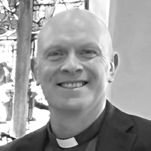
THE Archbishop of Dublin announced in June that I would accept the invitation to take up the role of Dean of Christ Church Cathedral in October 2026. I am privileged and honoured to be asked and yet, I am to follow in the footsteps of a faithful giant who led the cathedral for 18 years. In response to the request to share a few thoughts on my hopes for the future, I will attempt in what follows to outline my vision for the Cathedral’s future, even though I am writing some weeks before my installation on October 3rd. To be appointed Dean of Christ Church Cathedral is to receive the stewardship of an extraordinary inheritance. The Cathedral has stood close to the heart of Dublin for almost one thousand years. Kings, archbishops, reformers, worshippers, pilgrims, musicians, tourists, civic leaders and ordinary citizens have entered its doors. It has survived periods of conflict, ecclesiastical division, architectural deterioration, restoration and major social transformation. To say I am anxious stepping into such a role is an understatement. Christ in the heart of the cityThe establishment of Christ Church on its present site dates back to approximately 1028, when Dúnán, the first bishop of Dublin, and Sitric, the Norse king of Dublin, founded the original church. It was later incorporated more fully into the Irish Church and became associated with St. Laurence O’Toole, one of the most significant ecclesiastical figures in medieval Dublin.1 Its history is inseparable from the development of Dublin itself and from the changing relationships between Irish, Norse, Anglo-Norman, Anglican and wider European Christianity. However, a building may preserve history while gradually losing the living purpose for which it was built; being admired for itsarchitecture while being overlooked as a place of encounter with God. It may welcome thousands of visitors who leave knowing more about medieval Dublin but little about Jesus Christ. Shining a lightOne of my main priorities is that the Christ Church Cathedral will continue to speak clearly and confidently about the One after whom it is named. Christ will remain central to its foundation and continue to bring His message of hope to the people of Dublin and beyond. Paul Avis2 underlined this in 2019, noting that whatever other functions a cathedral may acquire, it is first and foremost a church. Its identity does not derive from architectural distinction or historical importance, but from being a community gathered for the worship of God. For Avis, the preaching of the Word and the celebration of the sacraments visibly mark the cathedral as a Christian church and provide the centre from which its wider ministry proceeds. This is important for Christ Church. Tourism, conservation, education, music and civic engagement are not competing alternatives to Christian identity; properly understood, they radiate from it. The cathedral’s life begins in worship and moves from worship into witness and service. As we approach the millennium, preserving this ordering will matter enormously. Christ Church is a Christian worshipping community which has inherited a remarkable medieval building through which its witness can be expressed. The Cathedral describes its vocation in terms of excellence in liturgy, outreach, music and hospitality.3 The task for the future is to strengthen the theological unity of these activities. The Cathedral’s 2023 report on mission expresses this aspiration: “Shining the light of Christ into the heart of the city”.4 To me that phrase describes a theological vocation where the cathedral stands physically at the heart of Dublin, but is called to inhabit the spiritual, intellectual and social heart of the city as well. Anne Lodge’s study of mission and ministry at Christ Church describes cathedrals as “liminal spaces inhabiting a threshold between the sacred and secular”.5 Christ Church receives thousands of people every week and whatever the reason for their arrival, they no doubt encounter a place whose sacred identity is intelligible and whose welcome points beyond the building to the living God. Cathedral peopleCathedrals depend upon a remarkable community of people whose service is sometimes highly visible and sometimes almost unnoticed. Among these, vergers occupy a particularly important place. They inhabit the intersection between worship, hospitality, ceremonial life, security, visitors, clergy and congregation. They are frequently among the first representatives of the cathedral whom a visitor encounters and among the last they see when they leave. Their ministry is practical, but it is also relational. The same is true of the many volunteers who give their time to sustain the cathedral’s worship, welcome, heritage and outreach. Avis6 reminds us that the Church is the body of Christ in which people are called to participate meaningfully in both liturgy and mission. I aim to continue to develop a culture in which vergers, volunteers, musicians, guides, administrative staff, clergy and congregation understand themselves to be participants in a shared Christian vocation. Sometimes the most important encounter a visitor has with Christ Church may begin not in the pulpit, but in a conversation at the door. Another priority will be to work with the Chapter members, staff and congregation and ask: how do we help people encounter, understand or respond to Jesus Christ? This need not produce a narrow or defensive institution. On the contrary, the more securely the cathedral understands its Christian identity, the more generously it can engage with people of different traditions, beliefs and experiences. Newbigin7 argued that the Church in a pluralist society should resist the temptation to reduce the gospel to a matter of private religious preference. Christianity is called instead to make public claims about God, humanity, history, reconciliation and hope. A cathedral can therefore welcome intellectual and religious diversity while remaining confident that the gospel has something necessary and life-giving to contribute to public life. Jesus declares: “I am the light of the world. Whoever follows me will not walk in darkness but will have the light of life” (John 8:12). A cathedral bearing his name doesn’t apologise for its existence as a Christian place. A visit to Christ Church is a journey through history...
