
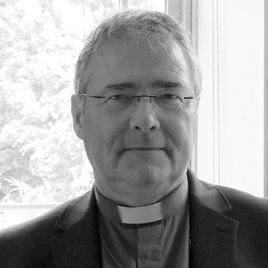
IN SERVICES of Confirmation I sometimes say to the candidates that – wherever they end up living in this increasingly globalised world – whenever they see the sign of the Cross, they should treat that place as their home, and they should be made to feel at home there. It is their Father’s House and they will always be welcome. That is the spirit in which the small ACC-19 planning group from the Church of Ireland approached its task. We aimed to make delegates, guests and visitors from around fifty countries feel at home – in worship, in debate, in table fellowship and in social interaction. We also hoped that they would discover something of what it is like to be disciples of Jesus Christ in Ireland today, and particularly in Northern Ireland, with our modest successes and manifest failures to be agents of reconciliation in a divided society. It may seem like a generalisation, but the Irish are good at hospitality, at welcoming visitors into our home. And if I had to pick out the most influential acts of hospitality during that momentous week, I would choose the day spent in Derry/Londonderry. We were welcomed by a generous multitude of hi-viz vested guides, each of whom shook the hand of every delegate as we entered the hotel for morning coffee – as is common in many of our African Provinces. The Bishop of Derry and Raphoe gave us a warm welcome as sons and daughters of the Resurrection and as agents of reconciliation, then helped lead us in a heart-warming rendition of ‘Danny Boy’, the air being well known to many of the delegates. This set the scene for a walk over the Peace Bridge and a tour of the Walls and lunch in the Guildhall, where one of the clerical delegates from (I think) Sierra Leone had a blast on the famous pipe organ as we drank our soup on a cold damp day. Without a doubt the highlight of the day was the relaxed and cheerful testimony of Richard Moore who spoke to us in St Augustine’s, “the wee church on the Walls”. Richard had been blinded in both eyes by a rubber bullet at the age of ten and in later life had sought out the soldier who had fired the shot and, through time and patience, had become his friend. It was a heartwarming experience to listen to his story, told without any hint of dreary self-righteousness or sentimentality. It was a most appropriate message to take back to a Conference which had the theme “Called to One Hope”. The friendly welcoming atmosphere was greatly enhanced by the staff of Assembly Buildings, the headquarters of the Presbyterian Church in Ireland and the venue for the Conference. Many delegates may have difficulty remembering any single phrase of what was said over the week, but they will remember how they were made to feel in that place – warm, welcome and well-fed. The three services of worship held there each day were a remarkable reflection of both the Irish context and the international nature of the Communion, as were the magnificent opening and closing Eucharists in Belfast Cathedral. Presiding at the Eucharist for the opening service, I could see many people visibly moved during the administration of Holy Communion by the heart-rending accompaniment of that virtuoso, Neil Martin, on the uillean pipes – every note a lament. The ConferenceAs expected, the Conference was dominated by discussion of IASCUFO’s1 Nairobi-Cairo Proposals (NCP) which aim to help the Communion find a realistic self-description, particularly around the nature of the relationship with the See of Canterbury. But before discussing that, I should point out that ACC-19 also dealt with and passed resolutions on a host of papers and subjects from many Anglican Communion networks and commissions, ranging from Safe Church through Science and Faith to The Communion Forest. It would be a pity if the life-giving work of these bodies, the real muscles and sinews of the Anglican Communion, were left unnoticed. I know that within the Church of Ireland that will not be the case, as the Commission for Christian Unity and Dialogue will make sure that relevant bodies within the Church consider the reports and resolutions. Nairobi-Cairo Proposals (NCP)Communion, the koinonia of the New Testament (and indeed of classical Greek civilisation) is at its core an experience of mutual giving and receiving. Primarily we have this communion with Jesus Christ as head of theekklesia, the community of which we are citizens and where our primary identity as human beings lies. But this mutual giving and receiving is also experienced with one another in the Church just as it was experienced by the free-born citizens of any Greek or Roman city. This mutual giving and receiving is experienced in many ways within the body, as I believe it was during every aspect of ACC-19. However, in an organisational sense within the Anglican Communion this koinonia is provided through the Instruments of Communion. This is why to not participate in the Instruments of Communion is to cut oneself off from a particular (and crucial) means of mutual giving and receiving. Thirty-seven of the forty-two Provinces of the Anglican Communion participated fully, in all the proceedings of ACC-19. Two further Provinces would have attended but DRC delegates could not travel due to the Ebola crisis and the catastrophic civil war in Sudan meant that their delegates were unable to apply for UK visas in time. Anyone who thought that ACC-19 would give a definite Yes or No to the NCP knows very little about how the Anglican Communion and its Instruments work. Only four Provinces have made formal written responses to the Proposals, with The Episcopal Church also providing a lengthy commentary and questions. The matter of trustThe question of just how much mutual giving and receiving with the See of Canterbury each Province believes is necessary for membership of the Anglican Communion sounds like a simple one, but it...
