
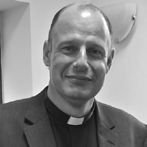
AS WE look forward to welcoming Revd Tom O’Brien as the new dean of Christ Church, we look back with gratitude to the 18 years V Revd Dermot Dunne has given us as the 35th dean of the cathedral. Since his appointment in 2008, Dermot has combined pastoral leadership, theological reflection, public engagement, and administrative change, making the cathedral one of Ireland’s most significant places of Christian worship, welcoming visitor and pilgrim alike. Born in Mallow, Cork in 1959, Dermot studied for the Roman Catholic priesthood in St. Patrick’s College, Maynooth. Ordained deacon in 1983 and priest in 1984, he served his curacy in Milford, Cork, before moving to London to serve as chaplain at Whittington Hospital, later ministering In Tollington park, St George’s Cathedral, Southwark, and St Mary’s, Chelsea. In London, he also trained as a psychotherapist and counsellor. In the 1990s, after struggling with elements of Roman Catholic social teaching – clerical celibacy, the ordination of women, and human sexuality – Dermot made the difficult decision to step aside the priesthood. Following his marriage to Celia, they moved to Ireland and made their home in Bray, Co Wicklow, where they quickly developed close friendships, worshipping in Powerscourt and Kilbride churches. It was at this time that Dermot began exploring a return to ministry – in the Church of Ireland. In 1998, he was licensed as a C. of I. priest by Archbishop Walton Empey and in 1999 was appointed Dean’s Vicar of Christ Church Cathedral by Dean John Paterson. He quickly made his presence felt in the cathedral by suggesting liturgical developments, broadening the cathedral’s outreach to the community and – supported by Dean Paterson – reordering much of the cathedral’s liturgical space. Following his tenure as Dean’s Vicar, Dermot and Celia moved in 2001 to Tinahely and Carnew in the diocese of Ferns, where he was later appointed archdeacon, greatly valued for his inspired leadership, pastoral sensitivity and creativity. It was in 2008 that Archbishop John Neill appointed Dermot as Dean of Christ Church Cathedral. He quickly settled into the role of Dean, bringing flair to the cathedral’s worship and outreach. Under his leadership, congregation numbers have increased, major works on the cathedral fabric have been undertaken, governance structures overhauled, and the cathedral has thrived as a place of welcome and hospitality for the thousands of visitors and pilgrims from many different backgrounds who make their way here every year. His preaching centres on human life and dignity, respect and reconciliation and the transformative love of God. Of course, a role of this weight is never without difficulty, and Dermot has had to balance the primacy of liturgical worship with a 1000-year-old building’s ever-present need for maintenance and restoration. Any institution of this nature requires an army of staff and volunteers, and occasionally issues arise which require enormous diplomacy and pastoral sensitivity. The Covid-19 pandemic presented unprecedented challenges, and yet Christ Church survived them all and now looks forward to its 2028 millennium celebrations, supported by the groundwork Dermot so carefully laid during his tenure. Earlier this year, Dermot announced his retirement after eighteen years. His time as dean has been memorable in so many ways, but perhaps he will be most remembered, along with his wife Celia, for acts of extraordinary kindness and heartfelt pastoral care. In most cases, these were rendered far from the public eye but will be remembered vividly by those who were nurtured by them. The Cathedral family, the dioceses of Dublin and Glendalough and the wider Church have benefitted enormously from Dermot’s ministry, and together we wish him and Celia every blessing in retirement....
